In most Michigan jurisdictions, any new structure over 200 square feet needs a building permit, and pole barns are no exception. The main carve-out is agriculture: buildings used solely for farming purposes on a working farm are often exempt from the building code. Everything else depends on where you're building, because Michigan handles permits at the local level. Here's how the process runs in the townships where we build.
Do I need a permit for a pole barn in Michigan?
Almost certainly, yes. The 200-square-foot threshold catches every pole barn we put up, from a two-car garage to a wide equipment shop. Assume you need a permit unless your building department confirms otherwise.
The permit checks the building against the Michigan Residential Code or the Michigan Building Code, depending on how you'll use it. Plan review covers the structure and any electrical work, plus the zoning rules for your parcel.
Here's the detail that trips people up in the counties we serve: the permit usually comes from the township or city building department, not the county. Oakland County townships administer their own building departments. The right office depends on whether your address sits in a city, a village, or a township, so start at your township hall if you're not sure.
Are agricultural buildings exempt?
Often, yes. Michigan's state construction code exempts many buildings used solely for agricultural purposes on working farms. Crop storage and livestock housing are the classic cases, along with equipment storage for the farming operation itself. The property generally needs an agricultural classification from the assessor, and a building with any residential or commercial component doesn't qualify.
The exemption is narrower than most people assume, and it only covers the building code. Zoning still applies. Setbacks, height limits, and lot coverage rules don't disappear because the building is a barn, and some townships require a zoning or land use permit even for exempt agricultural buildings. Check with both the building department and the zoning office before you skip a permit.
What does the permit process look like?
The specifics vary by office, but the sequence holds across most of southeast Michigan:
- Call the building department and ask what they need. Fees, forms, and required documents differ from one office to the next.
- Submit the application with a site plan showing where the building sits on the parcel, including distances to property lines and other structures, plus construction drawings.
- Wait for plan review. A straightforward pole barn often clears in a few days to a couple of weeks. Busy departments and complicated projects take longer.
- Post the permit at the job site once it's issued, and don't sit on it. Michigan permits commonly become void if work doesn't start within 180 days, or if the job stalls that long partway through.
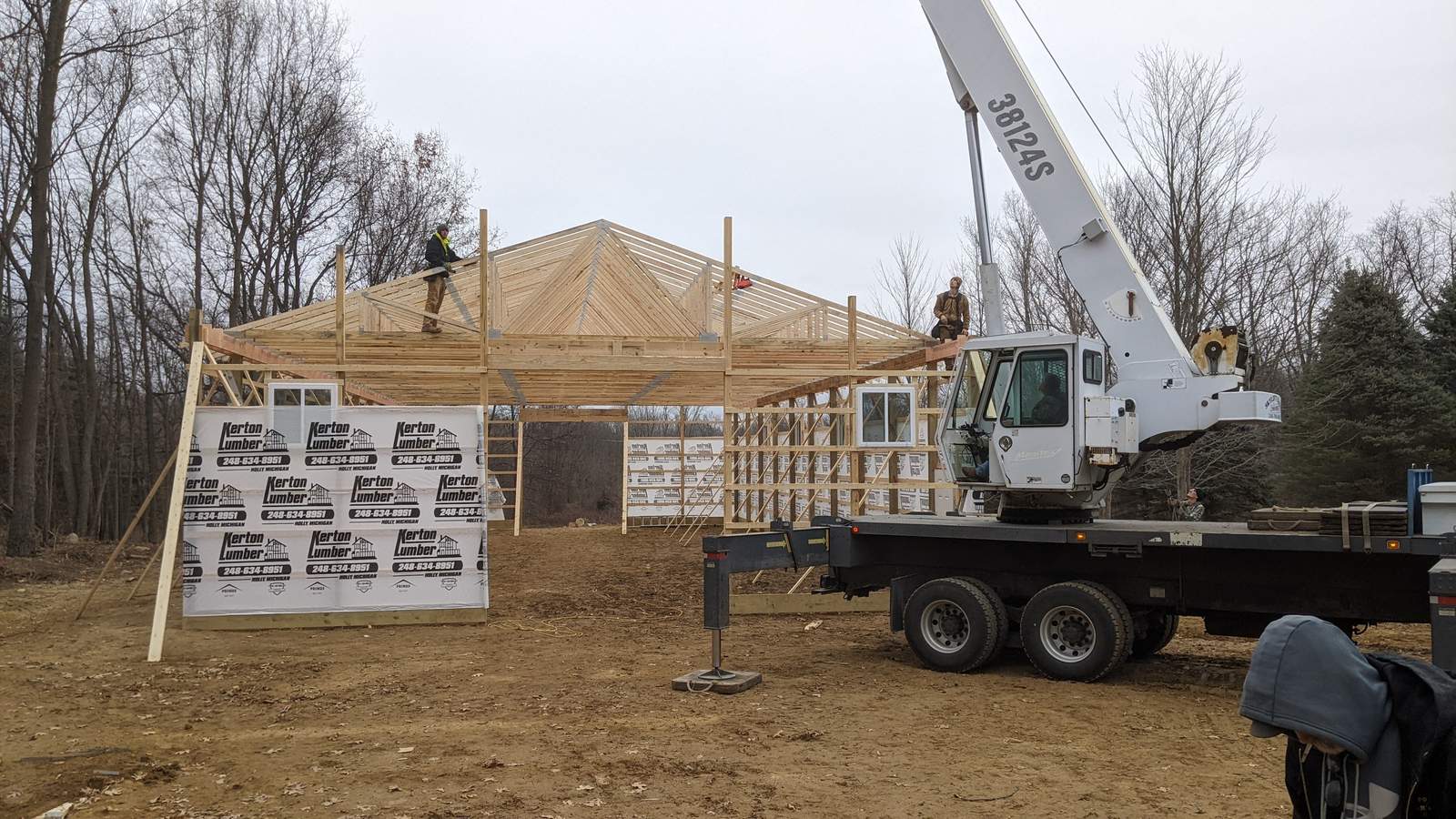
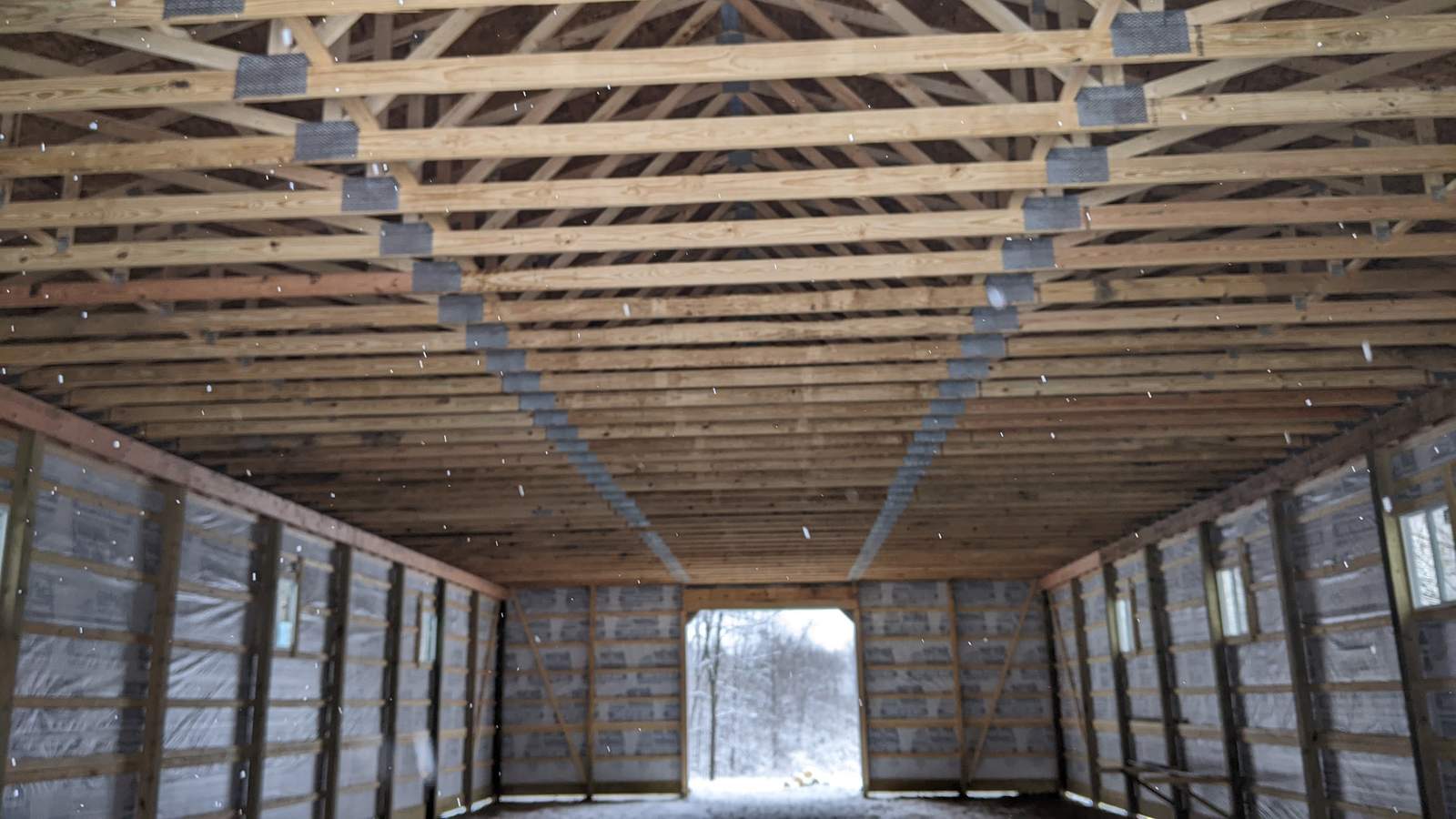
- Schedule inspections as the build progresses. Typical checkpoints are post embedment, framing and trusses, electrical rough-in, and the final.
We handle the permit package as part of the job: construction drawings, engineered truss specs, and coordination with the inspector during the build. You shouldn't have to learn your township's code from scratch to put up a barn.
What zoning rules should you check?
Zoning is separate from the building code, and it causes more surprises than the permit itself. Every district sets minimum setbacks from property lines and roads, and corner or waterfront lots often carry extra restrictions. Some townships cap total lot coverage or limit how big an accessory building can be relative to the house, which matters if you already have a detached garage. Height limits vary by district too, so verify yours before you plan a tall RV bay. A few communities in the more developed parts of Oakland and Macomb counties also set appearance standards for exterior materials and colors.
If your application hits a zoning snag, most issues can be resolved with a variance request or by shifting the building on the lot. The zoning board of appeals process takes time, which is one more reason to start early.
What happens if you build without a permit?
Nothing good. An unpermitted building can draw fines from the township, and it creates real problems when you sell or refinance, because a buyer's lender or title company can flag a structure with no permit record. Some departments will also make you open finished work back up for inspection before they'll issue a permit after the fact.
The fix is cheap by comparison: start the permit conversation several weeks before you want to break ground. If you're building in Oakland, Genesee, Lapeer, Macomb, Livingston, or Washtenaw county, tell us what you're planning and we'll fold the permit work into a free estimate.
Common questions
In most Michigan jurisdictions, yes. Any new structure over 200 square feet needs a building permit, and nearly every pole barn is bigger than that. Assume you need one unless your local building department confirms otherwise. Buildings used solely for agriculture on a working farm are often exempt, but zoning rules still apply.
Often, yes. Michigan's state construction code exempts many buildings used solely for agricultural purposes on working farms, like crop storage or livestock housing. The exemption is narrower than most people assume, and it doesn't waive zoning. Setback and land use rules still apply, so check with your township office before skipping the permit.
Either can apply, and we handle the permit package as part of the job: construction drawings, engineered truss specs, and the site plan your building department wants to see. Some townships still want the owner's signature on the application, but we prepare the paperwork and coordinate the inspections during the build.
It varies by township. A straightforward pole barn plan review often clears in a few weeks, and busy departments or complicated sites take longer. Don't pull the permit months before you're ready, either. Michigan permits commonly become void if work doesn't start within 180 days.